.jpeg)
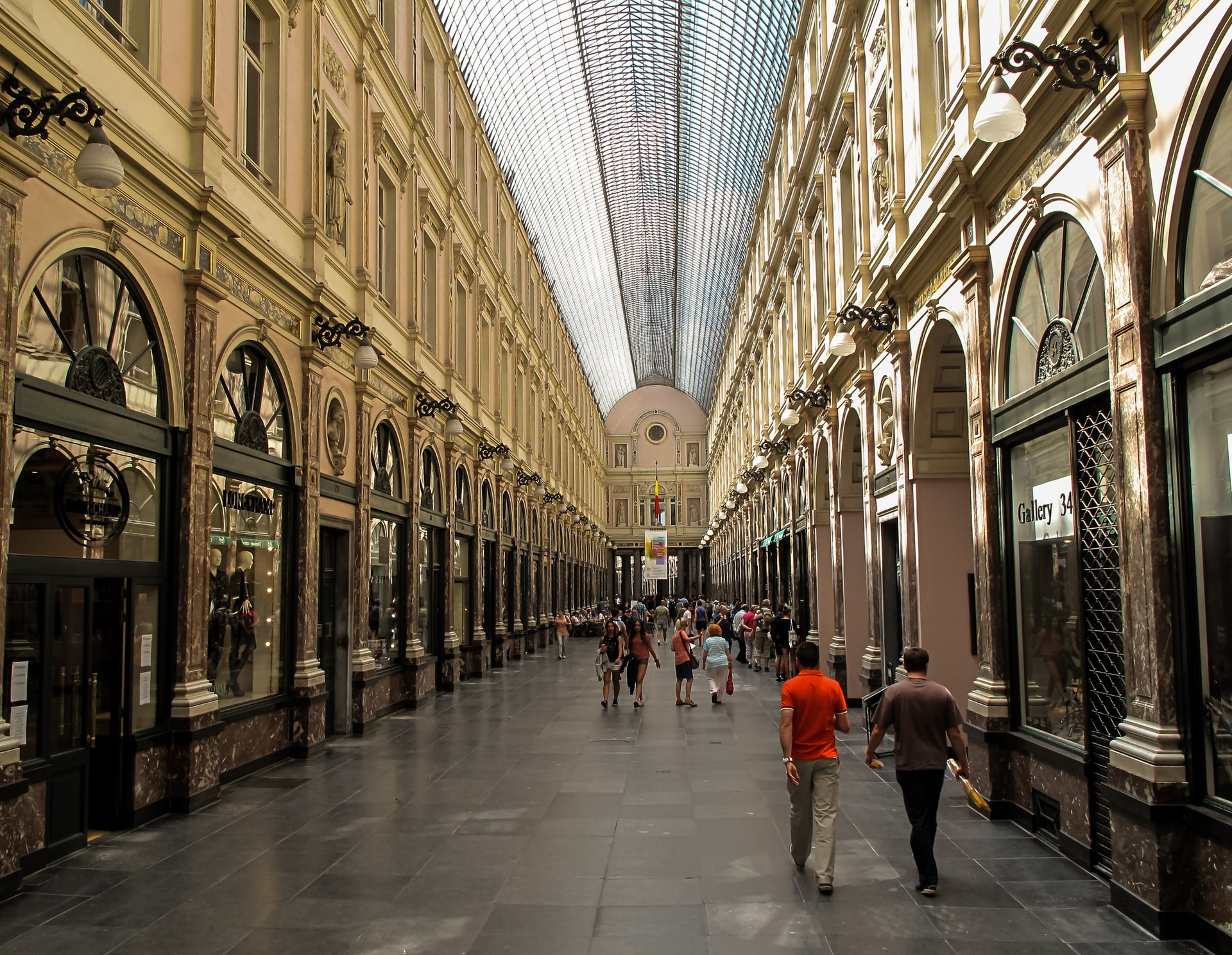
Most shops in Brussels close on Sunday, by law rather than habit. Banks, post offices, and public administration offices shut too. But the city does not go dark: museums stay open, most restaurants trade as normal, night shops sell through the evening, and several designated zones let ordinary shops open every day of the week, Sunday included.
Why do most shops in Brussels close on Sunday?
Belgian retail law requires most shops to observe a weekly rest period of 24 continuous hours. A retailer can pick the day. Almost all pick Sunday, following custom that predates the law itself. The rule sits in national legislation on shop opening hours, administered by the Federal Public Service Economy, known in French as SPF Économie and in Dutch as FOD Economie.
The law is not really about Sunday specifically. It is about guaranteeing every shop worker a fixed block of rest. Sunday is simply the default most retailers settle on. That single mechanism explains almost everything else in this article: every exception below is an exception to the rest-day rule, not a separate law about Sunday.
Bakeries hold a narrower allowance within the same framework. Many are permitted to trade on Sunday morning even outside a tourist zone, provided they then take their rest period later in the day. That is the structural reason a bakery selling Sunday bread often shuts by early afternoon while the café next door stays open into the evening. Details vary by shop. Treat this as a pattern, not a promise for any one address, and treat “afternoon” as a convention rather than a fixed clock time set by law.
This site does not hold a live copy of the legislation itself. Readers who want an account of how Access Brussels checks a legal detail like this one can find that explained separately, along with what the site will and will not claim without a named source.
Which parts of Brussels are exempt from the Sunday closing rule?
Some parts of the city are exempt entirely. Belgian law lets a commune apply to have a district recognized as a zone touristique in French, or toeristische zone in Dutch. Inside a recognized zone, ordinary shops may open every day of the year. Sunday included. That happens without touching the rest-day rule at all.
The Federal Public Service Economy maintains the register of which streets currently qualify, because zones are added, resized, or dropped by administrative decision, and the list genuinely does not sit still. The FPS Economy’s own site is the place to check before assuming a given street is still covered this year.
That said, certain areas have repeatedly appeared on published tourist-zone lists for the City of Brussels and neighboring communes:
- The historic lanes east of Grand-Place/Grote Markt, an area often called the Ilot Sacré, in the City of Brussels commune.
- Stretches of upmarket shopping streets near Avenue Louise/Louizalaan.
- Pockets of the European Quarter/Europese wijk near the EU institutions, where weekday office traffic gives way to a very different Sunday footprint.
Do not treat that as a permanent list. Council decisions reshuffle it over time. A shop’s own posted hours, and the federal register above, outrank anything printed here, including this paragraph.
Gare du Midi/Brussel-Zuid works differently again. The Sunday-morning market held around the station operates under a municipal market license, a separate legal mechanism from the tourist-zone rule. It authorizes stallholders, not shopfronts. The practical effect for a visitor is similar — that corner of the city trades normally on a Sunday morning while much of Brussels is shuttered — but the legal basis is not the same as a tourist zone, and nearby shopfronts do not automatically inherit the market’s exemption. For a guide to how this site distinguishes a legal exemption from a mere pattern of behavior, the same editorial standard applies across every article on the site.
What can a night shop actually sell on a Sunday?
A night shop — magasin de nuit in French, nachtwinkel in Dutch — is a distinct license under the same national law. It permits trading outside normal daytime retail hours, but only within a capped sales floor and a restricted product range, both set nationally and enforced through commune licensing.
The restriction on stock matters more than the hours. A night shop is not a small supermarket that happens to stay open late. Its legal purpose is to sell everyday essentials — food, drink, basic household items — not to replicate a full grocery aisle. The exact boundaries of size and stock are set by royal decree and revised periodically, so a chain’s own published rules are the only current reference worth trusting.
This is where the real gap in the week appears. In a neighborhood outside a tourist zone, an ordinary bakery or small grocer may close for its rest period in early afternoon. Night shops, by design, do not open until evening. Between those two points, on a Sunday, in a non-exempt district, very little is legally allowed to trade at all. How this guide handles a rule that varies by decree and by chain is explained on the site’s own about page, rather than asserted here as a fixed number.

Are museums open in Brussels on Sunday?
Yes, almost always. Sunday is one of the better museum days in Brussels, precisely because Monday is the day most museums choose as their own closing day, not Sunday. A visitor planning a museum-heavy weekend can generally count on Sunday opening and build a schedule around a Monday gap instead.
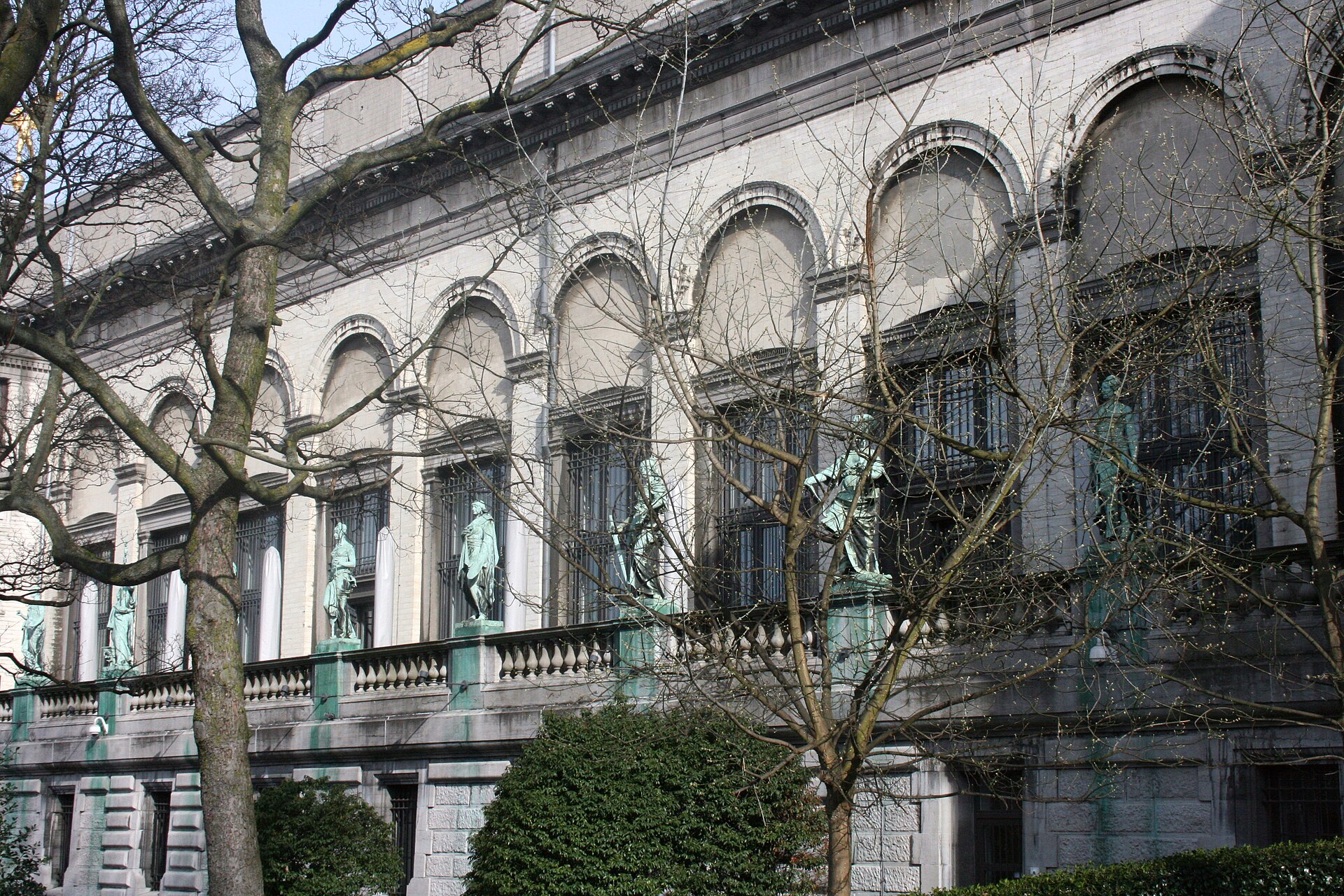

Brussels also has a genuinely long list of museums that charge nothing at all, plus others with a free evening or a free first-Sunday window set by their own institution rather than by any citywide rule. visit.brussels, the region’s official tourism body, publishes an overview of major institutions and is a reasonable starting point for confirming a specific museum’s current Sunday hours before crossing town for it.
One well-known exception sits on the calendar side, not the Sunday side. The Horta Museum takes a limited number of timed visitors and requires booking in advance, whatever day of the week is planned.
What about restaurants, cafés, and bars?
Restaurants and cafés are not bound by the retail rest-day rule in the same way, and most trade normally on Sunday. Some choose Monday as their own closing day instead, on the reasoning that Sunday service is worth more to them than a Monday would be.
Bars generally stay open through Sunday evening as well. The pattern that trips visitors up is not Sunday itself. It is assuming every kitchen serves food at every hour, which is not a Brussels-specific problem so much as a restaurant-industry one everywhere.
Does public transport run a normal Sunday service?
The regional operator, STIB in French and MIVB in Dutch, runs the full metro, tram, and bus network on Sunday, but at reduced frequency compared with a weekday. Some routes and night services follow a distinct Sunday pattern rather than a weekday one. STIB-MIVB’s own site publishes current timetables by line, which is the only place to confirm a specific service before relying on it.
Fare structure does not change by day of the week. What changes is how often a train comes, not what it costs to ride it. Readers curious about what data this site itself collects when a page like this one is read can check that separately from any operator’s own terms.
What stays shut everywhere, tourist zone or not?
Some closures ignore the entire exemption system. They apply across the region regardless of any zone:
- Banks and most bank branches.
- Post offices.
- Government and municipal administrative offices.
These close on Sunday across all nineteen communes of the Brussels-Capital Region, because they follow separate rules from the shop-hours law described above, not because of any tourist-zone status.
Pharmacies close too, as a rule. Not entirely, though. Belgium runs a rotating on-call system — pharmacie de garde in French, wachtapotheek in Dutch — that guarantees at least one pharmacy reachable in a given area at any time, coordinated through the pharmacists’ professional association rather than through any single shop’s own posted hours. A traveler who needs a pharmacy on a Sunday should look for the on-call locator, not walk street to street hoping one happens to be lit.
This is also where “nineteen communes, not one city” genuinely matters. Waste collection, parking enforcement, and market permits are all set commune by commune, and Sunday retail rules sit inside that same patchwork rather than above it. The site’s own note on how it handles detail that differs commune by commune covers this pattern in more depth than one article can.
What always happens on a Sunday, market-wise?
Two recurring markets anchor a Brussels Sunday regardless of the retail-hours law. The Marché du Midi, held every Sunday morning around Gare du Midi/Brussel-Zuid, is one of the larger open-air markets in the region by most published descriptions, running under its own municipal market authorization rather than the shop-hours rule.
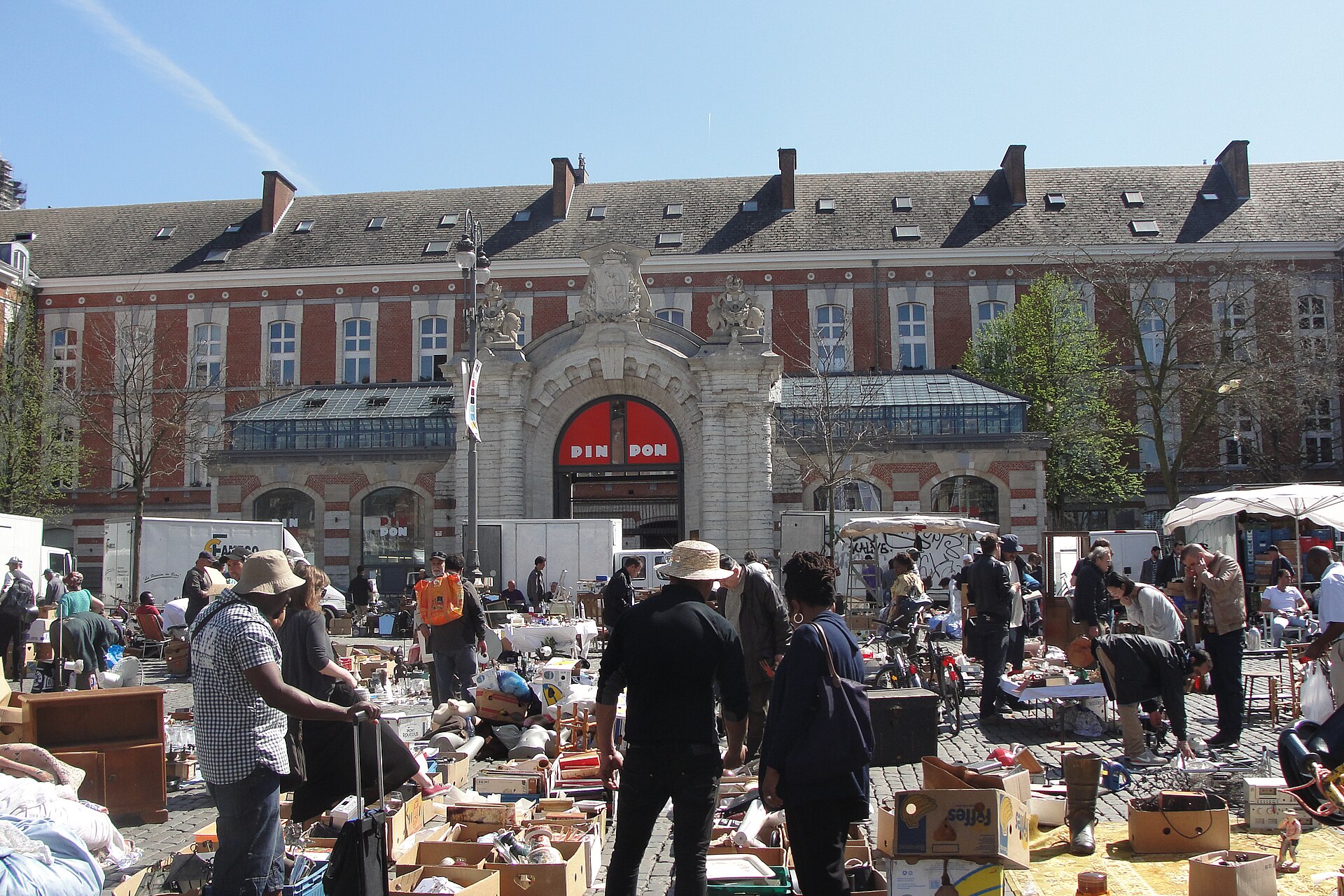

The flea market at Place du Jeu de Balle/Vossenplein, in the Marolles/Marollen district, is the more dependable fixed point of the two. It opens every morning of the year, Sunday included, and does not pause for the closures that affect ordinary retail nearby.
Neither market answers the tourist-zone question directly. Both simply show that a market stall and a shopfront sit under different rules, even standing on the same street.
Planning around a Brussels Sunday
The practical shape of the day is this: assume a shop is closed unless a specific reason says otherwise, then check that reason. A tourist-zone address, a market stall, a bakery’s morning window, a museum, a night shop after dark — each rests on its own legal basis. None of them generalizes to the street next door.
Access Brussels does not hold live tariff, timetable, or hour data for any institution named above, and treats this kind of detail as perishable by nature rather than fixed. How this guide is written, checked, and paid for sets out the sourcing standard behind that caution. Readers who want to know what a visit to this site collects, and what it does not, can find that in the privacy policy for Access Brussels.
Access Brussels is an independent guide written from published, checkable sources. We have not visited the places described here and we do not publish personal recommendations or invented ‘local favorites’ — where something is singled out as notable, we say who says so. Opening times, fares, closures and prices change at short notice, so treat everything here as a starting point and confirm with the museum, operator or venue directly before building a day around it. We give no advice on visas, insurance, health or safety; use your own government’s official guidance for those.