Food & Drink
Manger & boire · Eten & drinken
Frites, waffles, mussels and chocolate — what is actually Belgian, what is sold to visitors, and where the difference shows.
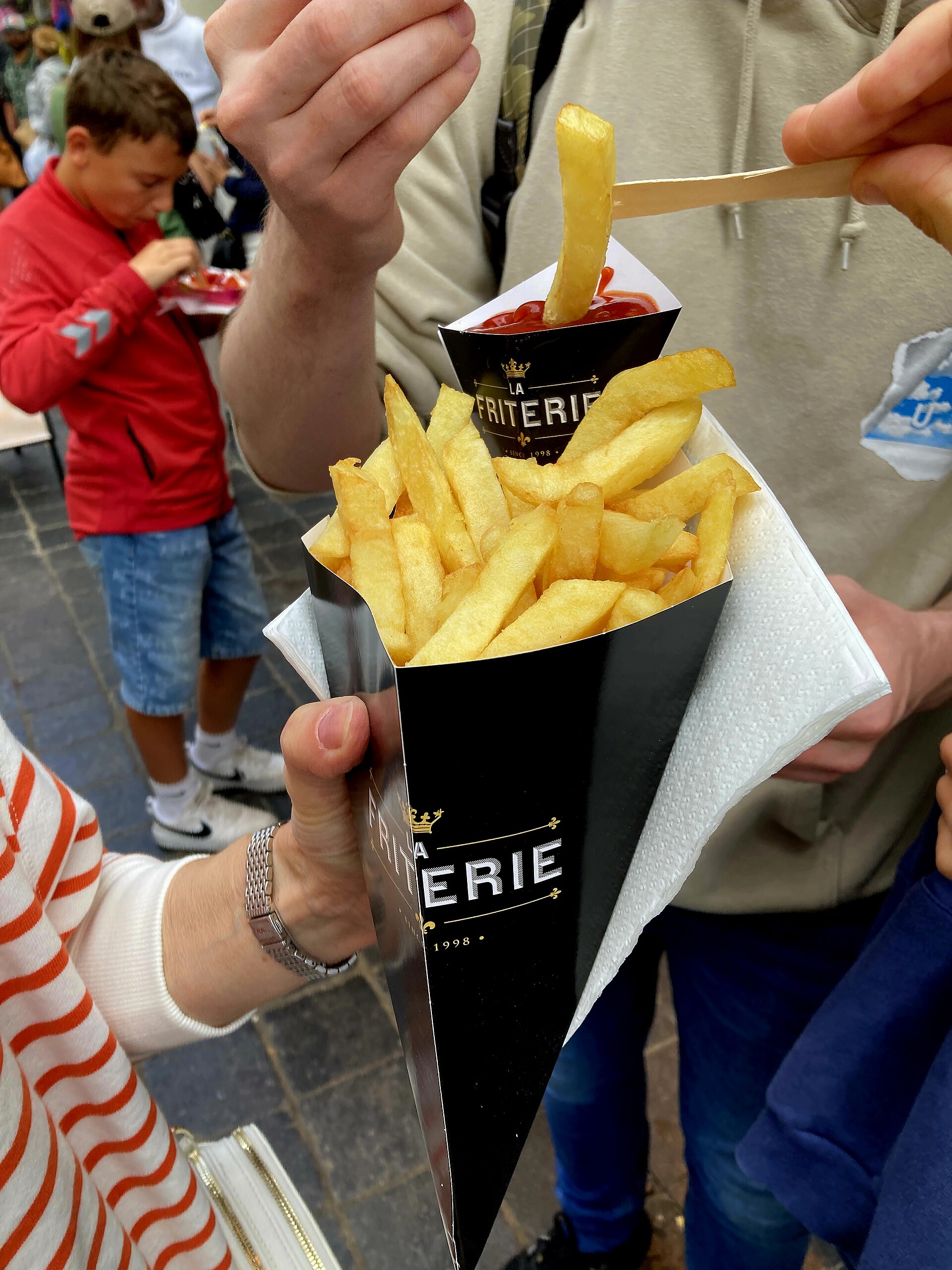

Belgian food is better than its reputation and worse value on the tourist axis than anywhere else in the city. The rule is geographic: one street off the Grand-Place, the price halves and the quality rises.
What is actually Belgian
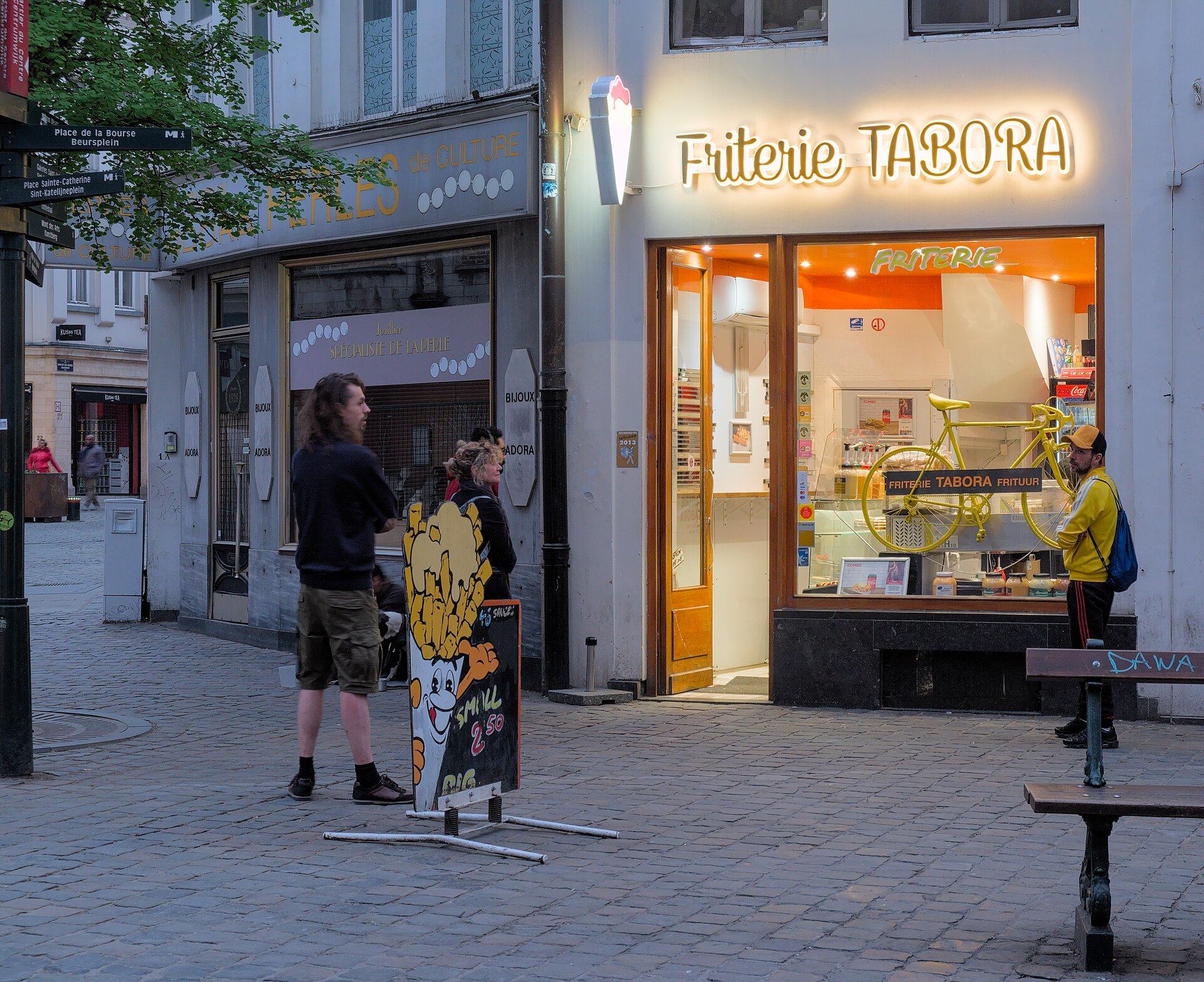
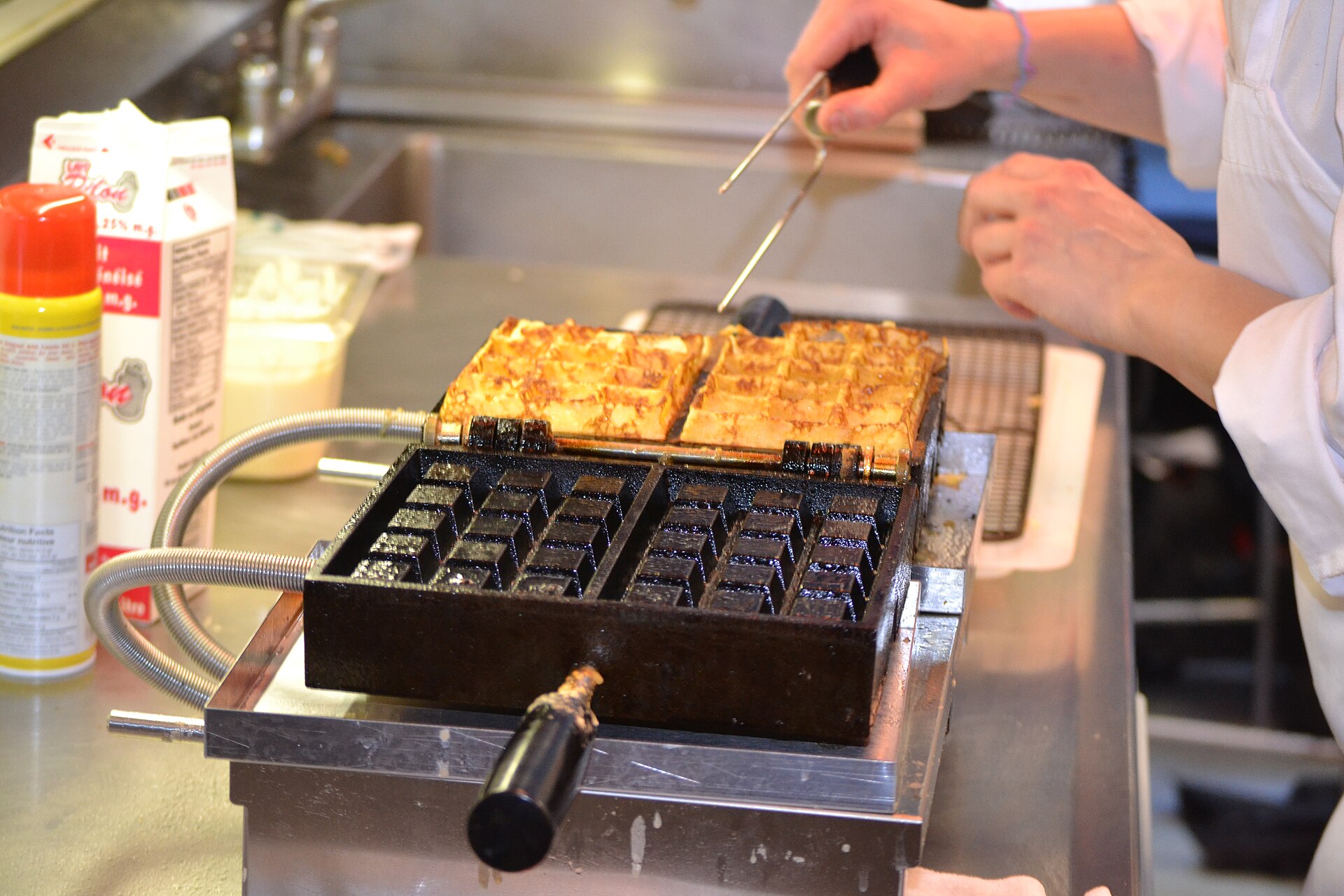
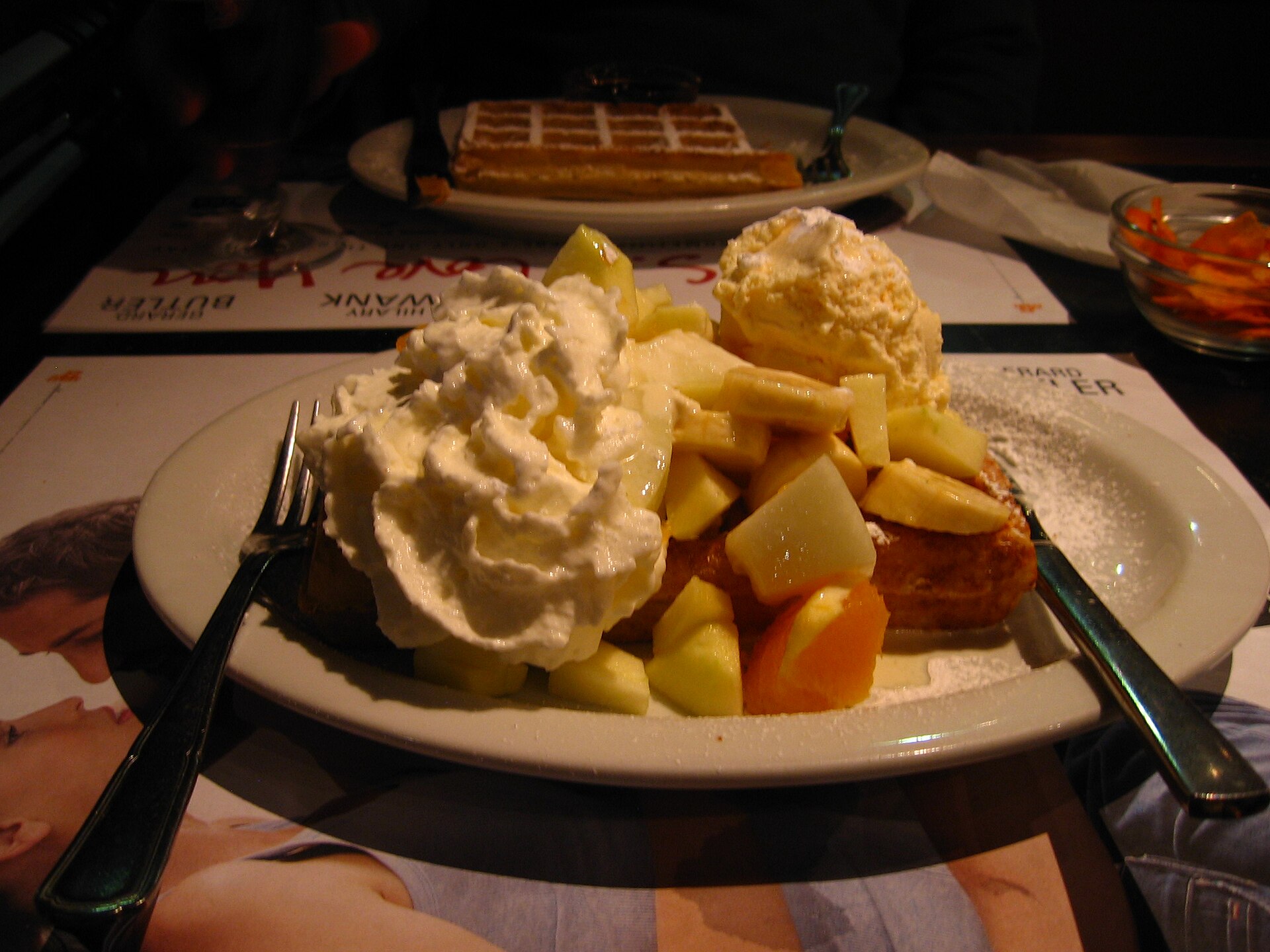
Frites are fried twice, served in a cone with a sauce you choose, and bought from a friterie or frituur — a hut or a shopfront, not a restaurant. Waffles come in two kinds: the rectangular Brussels waffle, light and dusted with sugar, and the denser, sweeter Liège waffle with caramelised sugar in the dough. The tourist version buried under cream and sauce is neither.
Moules-frites is seasonal in principle and available all year in practice. Carbonnade, beef stewed in beer, is the dish to order if you want the actual national cooking.
.jpg)
⚠️ The Rue des Bouchers
The lane of restaurants just off the Grand-Place, with the seafood displays and the staff who approach you on the pavement, is the single most complained-about place to eat in Brussels. If someone is standing outside trying to bring you in, keep walking.

Chocolate
The famous names cluster on the Sablon and in the Galeries, and they are priced accordingly. Belgian supermarket chocolate is genuinely good and a fraction of the price — buy the box at the shop and the everyday bar at a Delhaize.

Checked on 5 September 2026 against published sources. Fares, hours and closing days change without much warning — confirm before you travel.
This section is being written. The guide above is the section for now. New articles are published across the site about twice a week rather than a section being filled in a day, so this page grows steadily — it is worth looking in again. In the meantime the sixteen sight pages and the plans by trip length are finished, and they are the best place to start.
Coming next in this section
- Frites in Brussels: the friterie, the sauces, and the double fry
- Brussels waffle or Liege waffle: the difference that matters
- ⚠️ The Rue des Bouchers, and how the restaurant touts work
- What to eat in Brussels that is actually Belgian