Brussels Airport in Zaventem connects to the city center mainly by train, which is the fastest and most frequent option. A bus line fills the gaps when trains are not running. Taxis and ride-hailing cars cover the hours when neither does. None of this applies if the flight actually landed at Brussels South Charleroi Airport, which is a different airport entirely, an hour to the south.
How do you get from Brussels Airport to the center?
For Brussels Airport Zaventem, take the train. It runs directly under the terminal, with regular departures to Bruxelles-Central/Brussel-Centraal, Bruxelles-Nord/Brussel-Noord, and Bruxelles-Midi/Brussel-Zuid. The journey takes roughly 15 to 25 minutes depending on the station.
Zaventem sits in the commune of the same name, just north-east of the Brussels-Capital Region and technically inside Flanders. That matters less for a traveler than the fact that it is one airport with one obvious rail link. The confusion starts with the other airport.
Zaventem or Charleroi — which airport did you actually land at?
Check the airport code on the boarding pass. BRU is Zaventem. CRL is Charleroi. They are roughly 50 kilometers apart, and no train connects them directly.
Brussels South Charleroi Airport uses the city’s name in its branding, which is the entire source of the confusion. It is a separate facility near Charleroi, used heavily by low-cost carriers. A budget flight advertised as “Brussels” very often lands here, not at Zaventem.
Anyone in that position should stop reading the Zaventem train advice. It does not apply. The standard link from Charleroi is a dedicated coach operated by Flibco, running to Bruxelles-Midi/Brussel-Zuid. It takes about an hour, and departures are timed around flight schedules rather than running all day at a fixed frequency, so the exact timetable is worth checking on Flibco’s own site before arrival. Details on the airport itself, including other ground transport options, are published by Brussels South Charleroi Airport.
What time does the last train leave Zaventem?
Airport trains do not run all night. Service generally stops around midnight, though the exact last departure shifts by a few minutes year to year and by direction. SNCB/NMBS, the national rail operator, publishes the current timetable for the Brussels Airport line on its own site, and that is the only place to confirm a specific last-train time before relying on it.
This is the hinge point for planning. A flight landing before 11pm is almost always fine for the train. One landing after midnight is not — the train has already stopped, full stop, regardless of what a travel budget assumed. At that point the choice is a taxi, a pre-booked transfer, or a hotel near the airport.
There is no late-night train replacement service worth counting on. A reduced network of night buses exists in parts of the city, run by STIB/MIVB, the Brussels transit operator, but it is not built around the airport corridor. Anyone checking should confirm current night coverage on STIB’s own site rather than assume it reaches Zaventem.

What about the bus from the airport?
STIB operates express bus lines between Zaventem and the European Quarter, historically numbered 12 on weekdays and 21 on evenings, weekends, and holidays. They run to Schuman and on toward Gare du Luxembourg/Luxemburgstation, which sits close to several EU institutions but is not the same as the historic center.
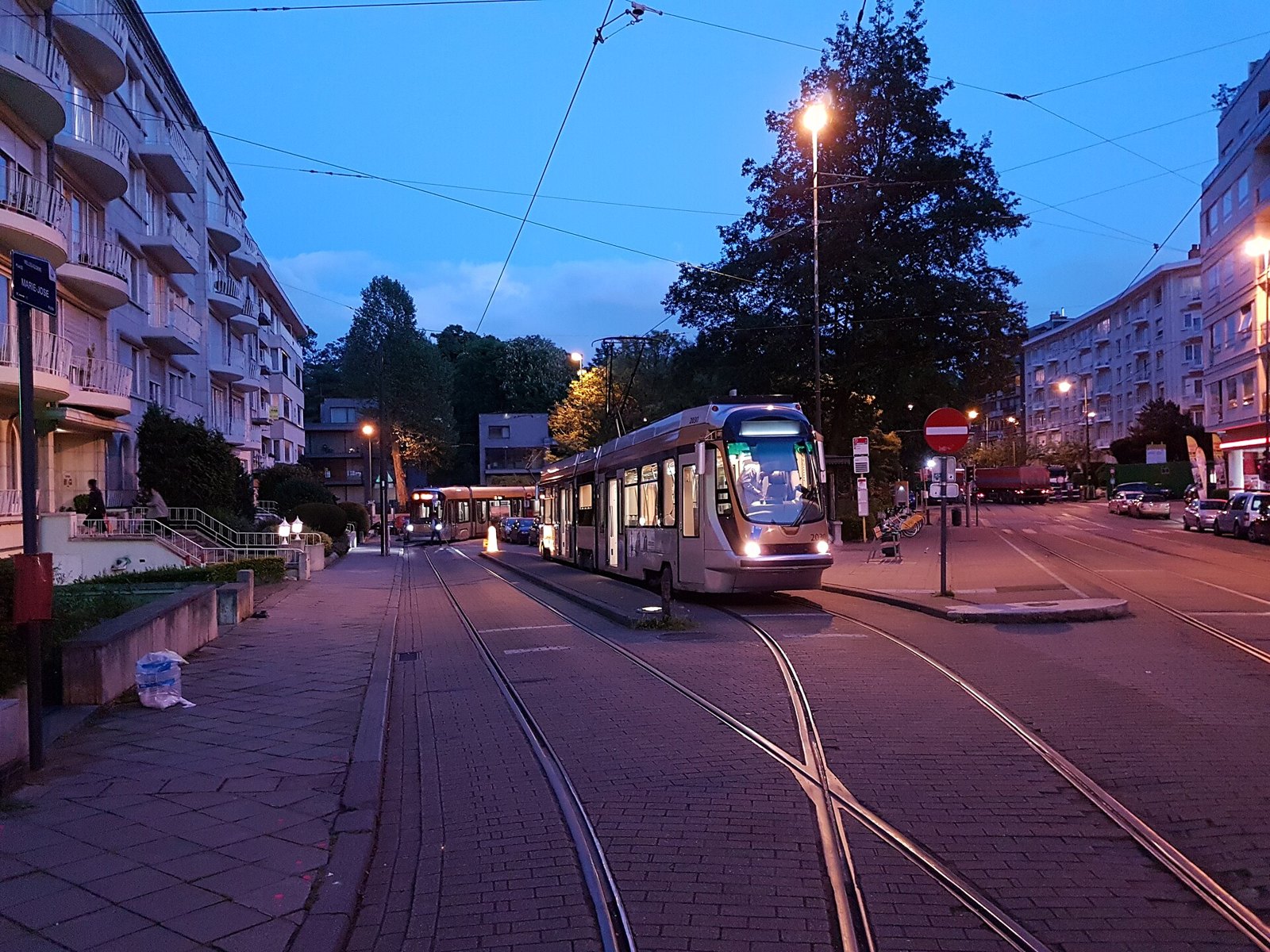
From there, a connecting tram or metro is needed to reach Grand-Place/Grote Markt or the Gare Centrale area. The bus is useful for a specific destination near Schuman. For the center itself, the train is usually simpler, and it avoids road traffic that a bus cannot.
A separate regional operator, De Lijn, also serves the airport with longer-distance Flemish routes. These suit travelers heading toward towns outside Brussels rather than the city center.
What about a taxi or ride-hailing car?
A staffed taxi rank sits outside the Zaventem terminal, and Brussels Airport‘s own site lists the authorized taxi operators permitted to pick up there. Fares are metered under Belgian regulation rather than fixed, so the cost depends on traffic and the exact drop-off point in the center.
Ride-hailing apps including Uber also operate in the Brussels region and can be requested from the terminal. For a flight landing after the last train, this becomes the realistic option, not a backup. No invented fare belongs in this article; the operator’s own app or the taxi meter is the only reliable source at the moment of travel.
Tipping is not expected the way it is in some countries. The structure of what is and isn’t already included in a Belgian fare is covered separately in this site’s guide to tipping in Brussels.
A decision rule keyed to arrival time and airport
The right answer depends on two things: which airport, and what time. The following covers the cases that actually trip travelers up.
- Landing at Zaventem (BRU) before roughly 11pm: take the airport train. It is the fastest, most frequent link to the center.
- Landing at Zaventem close to midnight: check the exact last departure on SNCB’s own site before assuming a train will still be running.
- Landing at Zaventem after midnight: the train has stopped. Plan on a taxi, a ride-hailing car, or a pre-arranged transfer instead.
- Landing at Charleroi (CRL) at any hour: none of the Zaventem train advice applies. Use the Flibco coach to Bruxelles-Midi, and check its schedule in advance since it is not a constant all-hours service.
- Booked a connecting flight that was marketed as “Brussels” but shows CRL on the ticket: that is Charleroi, not Zaventem. Confirm the airport code before planning any onward journey.
How does the fare structure actually work?
The airport train ticket is set by SNCB and typically combines the standard rail fare with a supplement specific to the airport station, published on the operator’s own site rather than fixed indefinitely. STIB’s urban network, by contrast, runs on a zone-based ticket system with its own logic for single tickets, day passes, and multi-day cards. How that system is structured, and what a single ticket actually covers, is explained in this site’s guide to how a STIB ticket works.
A city-wide travel pass bought before leaving the airport can sometimes cover part of the journey into town, depending on the pass and the route chosen. Whether a 24, 48, or 72-hour pass actually pays off compared to single tickets is a separate calculation, covered in this site’s break-even guide to Brussels travel passes.
Is a Brussels Card worth buying at the airport?
The Brussels Card bundles museum entry with transport, and whether it is worth the cost depends heavily on how many museums are actually planned and how many days are spent in the city. It is not primarily a transport product, and buying it just to get from the airport to the center would usually be the wrong reason. This site’s break-even calculator for the Brussels Card works through the math properly.
What about luggage on arrival?
Travelers arriving with bags before a hotel check-in, or needing to store luggage before a flight home, have options at the main stations rather than only at the airport itself. This site’s guide to left luggage in Brussels covers lockers and alternatives at Bruxelles-Central, Bruxelles-Nord, and Bruxelles-Midi.
Beyond the airport transfer itself, the wider question of how Brussels’ transport network fits together — trams, metro, buses, and the regional rail loop — sits in this site’s Getting Around archive. Broader trip-planning questions, including holidays and closures that can affect a first day in the city, are gathered in the Planning & Practicalities archive.
Access Brussels is an independent guide written from published, checkable sources. We have not visited the places described here and we do not publish personal recommendations or invented ‘local favorites’ — where something is singled out as notable, we say who says so. Opening times, fares, closures and prices change at short notice, so treat everything here as a starting point and confirm with the museum, operator or venue directly before building a day around it. We give no advice on visas, insurance, health or safety; use your own government’s official guidance for those.
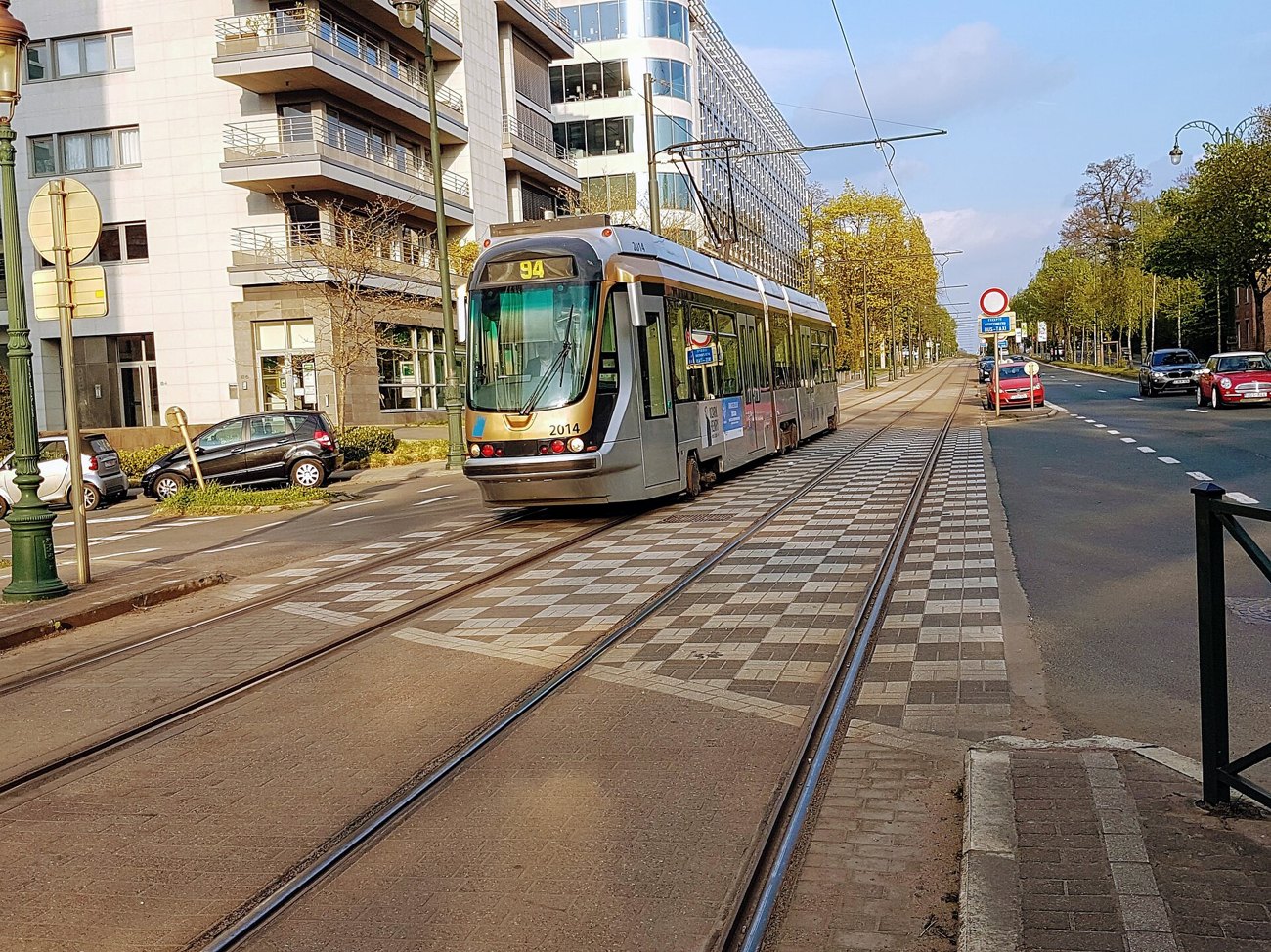
Featured image: Photo by Tram93, source, CC BY-SA 4.0
