A premetro stop looks like a metro station because it mostly is one: a deep concrete platform, tiled walls, escalators, built to metro dimensions. What arrives, though, is a tram. Brussels built these tunnels from the 1960s onward, planning eventual conversion to full metro. Some tunnels got it. Others never did.
What does “premetro” actually mean?
Premetro is Brussels’ own term for an underground tram line built to metro-grade standards, so it can later become a genuine metro line without re-digging the tunnel. A tram runs on rails, through stations, sized for a metro train that may or may not ever show up.
The idea was practical, not romantic. Building a full metro line means heavy rolling stock, third-rail power, signaling, and a depot built for it. That is expensive, and only justified once ridership is proven. A tunnel built for trams is cheaper to open and run. If demand grows enough, the region swaps in metro trains later, using the same hole in the ground.
Why did Brussels build tunnels for trams instead of just buying metro trains?
Because nobody could be sure, in advance, which corridors would need full metro capacity. Trams move fewer people per train than metro stock does. A tunnel sized for metro, running trams until the numbers justify more, hedges that bet. Brussels’ first full metro line opened in 1976, using sections of tunnel that had carried trams for years beforehand. Other tunnels, built on the same logic, stayed tram-only. They still are.
Which underground stops are premetro, and which are now full metro?
Two corridors matter most for a visitor. Lemonnier and Anneessens, under the boulevards through the historic center, are premetro today: trams run through, no metro train does. Porte de Namur / Naamsepoort, Trône / Troon and Louise / Louiza started the exact same way, as tram tunnels, but were absorbed into full metro service once the city completed its inner loop. Underground does not mean permanent status either way.
| Stop | What runs there today | Status |
|---|---|---|
| Lemonnier | Trams only, no metro train | Premetro |
| Anneessens | Trams only, no metro train | Premetro |
| Porte de Namur / Naamsepoort | Metro line 2 and line 6 | Full metro, converted |
| Trône / Troon | Metro line 2 and line 6 | Full metro, converted |
| Louise / Louiza | Metro line 2 and line 6, plus a separate tram tunnel one level down | Both — a genuine two-tier interchange |
Historically, the Lemonnier–Anneessens tunnel has carried trams in the 3/4/7/8/51 family. Treat any tram number here as illustrative, not current. Brussels has renumbered large parts of its tram network before and will again. Before relying on a specific line, check STIB-MIVB’s own network map, which is the only version of this list worth trusting on the day of travel.
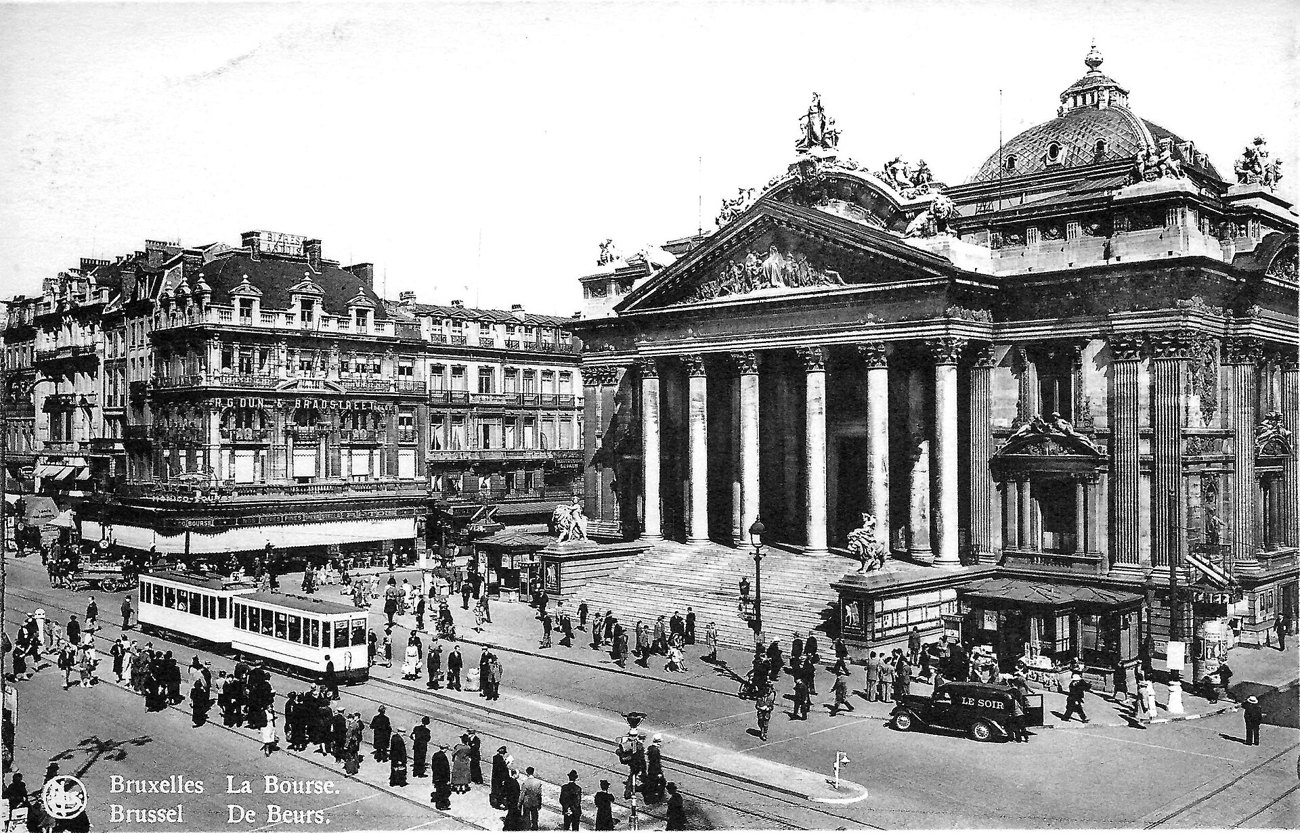
The Louise case is the clearest proof that premetro status is not fixed. One building holds a full metro station on line 2/6, and underneath it, a separate tram platform still serving a line that continues south toward other neighborhoods. Both are real. Neither is a mistake.
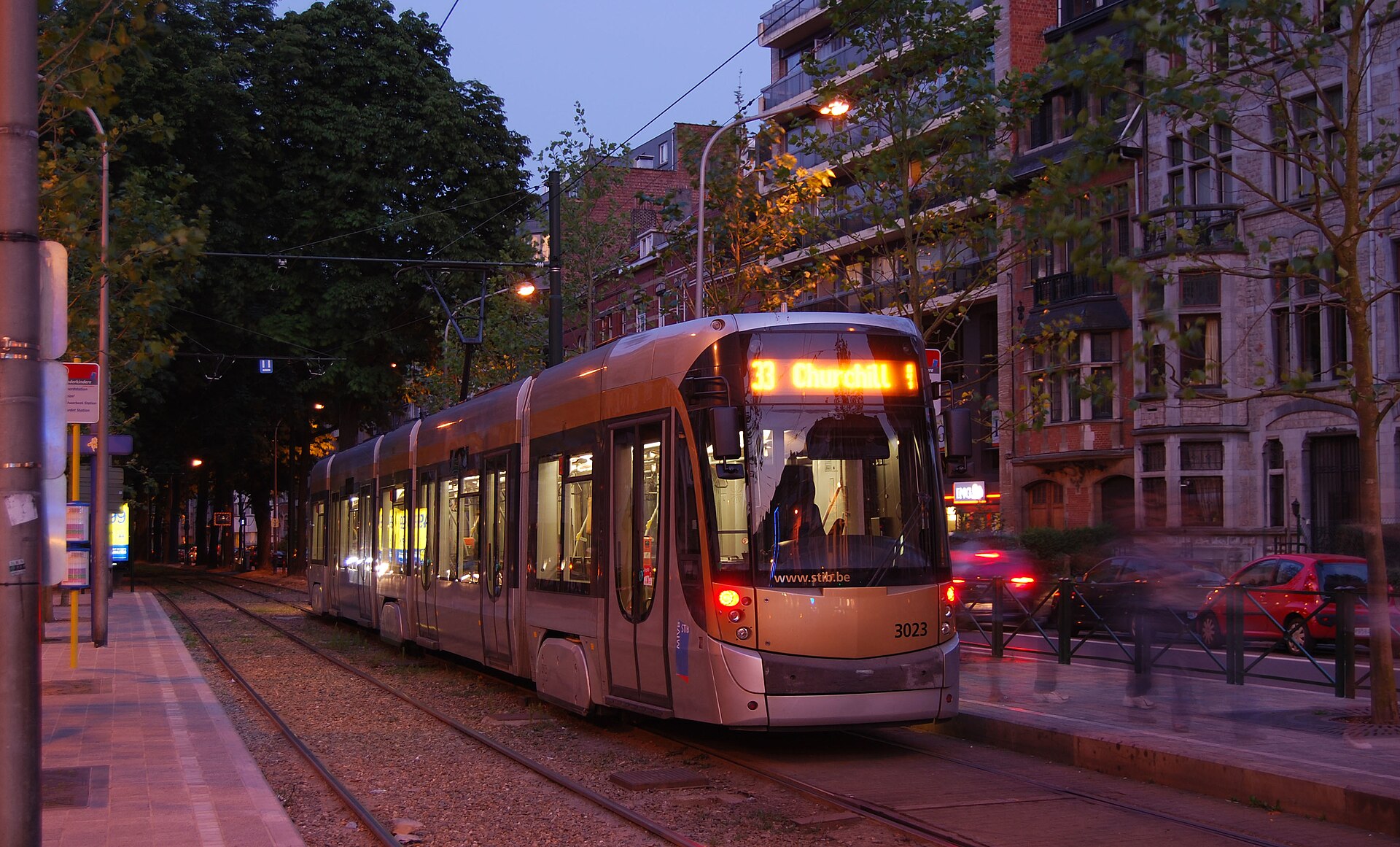

How can a rider tell, standing on the platform, before anything arrives?
Four checks, roughly in order of reliability: the route badge, the overhead wire, the vehicle itself, and the doors. None of them needs memorizing the city’s entire transit history.
- The route badge. Brussels metro lines are always 1, 2, 5 or 6, shown in a blue diamond. A tram, even underground, shows a two-digit number in STIB’s tram livery. Anything outside 1, 2, 5, 6 is a tram.
- The overhead wire. Look up. Tram tunnels keep a contact wire and pantograph. Metro tunnels don’t — metro stock draws power from a third rail at track level. No wire overhead, no tram.
- The rails themselves. This one won’t help. Brussels trams and metro run on the same standard gauge, which is exactly what makes a tunnel convertible in the first place. The track gives nothing away.
- Vehicle length and floor height. Metro trains are long, fixed multi-car sets with a floor matched precisely to the platform edge, for level boarding at every door. Trams vary — several models share the same tracks, some low-floor, some not — so a small step or gap at some doors is normal underground on a premetro stop and would be a fault on a true metro one.
- Platform screen doors. STIB has fitted these at a number of metro stations as a safety upgrade. Premetro platforms don’t have them, because different tram types with different door spacing share the same stop. Their presence leans toward metro. Their absence proves nothing, since most stations across the network still don’t have them either.
Does any of this change the fare?
No. The ticket does not care which tunnel a train uses. Both tram and metro belong to STIB / MIVB (Société des Transports Intercommunaux de Bruxelles / Maatschappij voor het Intercommunaal Vervoer te Brussel), the regional operator, and fall under the same zone and validation system. What a single ticket actually covers, and where it stops covering a journey, is explained in How a STIB Ticket Works, and What It Actually Covers. Visitors weighing a multi-day pass against single tickets can run the numbers in Brussels Travel Passes: 24, 48 or 72 Hours, Which Pays Off.
One practical point does carry over, though: a premetro platform can feel more crowded for its size than a metro one, simply because tram sets are shorter. That matters more with luggage than it does for a short hop between two central stops.

Is Brussels still converting premetro into metro today?
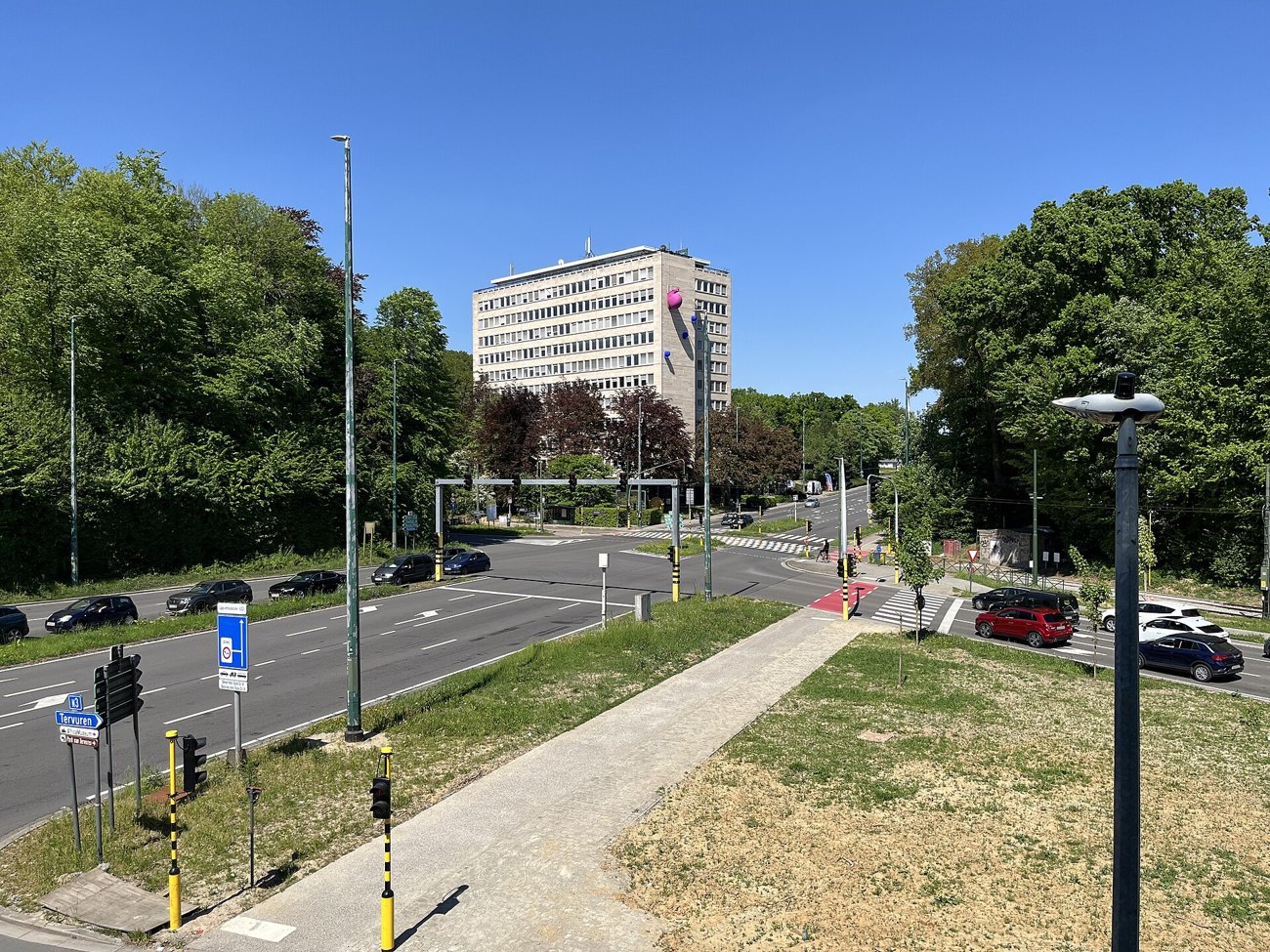
Yes, in part. The Lemonnier–Anneessens tunnel sits inside a long-running project, usually called Metro 3, to extend full metro service north from the city center. Work has proceeded in phases for years, and completion dates published by the region have slipped more than once. Brussels Mobility, the regional authority overseeing the infrastructure, and the Brussels-Capital Region’s own site both publish current status updates. Treat any timeline from elsewhere, including this page, as a snapshot rather than a promise.
For a resident planning around construction detours, or a visitor trying to work out why a route suddenly runs on the surface for a few stops, the general shape of the network — what’s tram, what’s metro, where the two overlap — is covered more broadly in the Getting Around archive, alongside arrival routes such as Brussels Airport to the City Center: Train, Bus, or Taxi.
Why does any of this matter to a visitor?
Mostly for expectations. A metro icon on a map or app implies frequent, fast, multi-car service running underground the whole way. A tram icon, even for an underground stretch, means a shorter vehicle that will likely surface again before its final stop, and that shares the tunnel’s reliability with the rest of the tram network above ground. Neither is better. They’re different machines solving the same problem at different stages of the same decades-long project.
Broader planning questions — what closes on a Belgian public holiday, how the city’s calendar shapes crowding, how this site sources and checks what it publishes — sit in the Planning & Practicalities archive and on the About page, for readers who want to see how an article like this one gets built.


Access Brussels is an independent guide written from published, checkable sources. We have not visited the places described here and we do not publish personal recommendations or invented ‘local favorites’ — where something is singled out as notable, we say who says so. Opening times, fares, closures and prices change at short notice, so treat everything here as a starting point and confirm with the museum, operator or venue directly before building a day around it. We give no advice on visas, insurance, health or safety; use your own government’s official guidance for those.
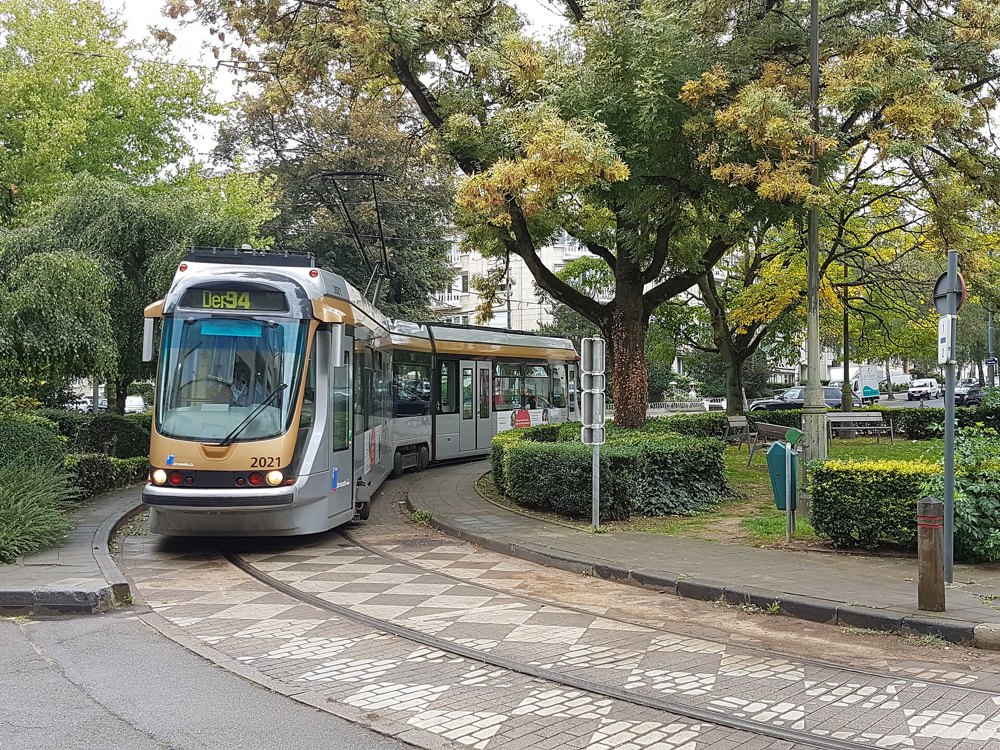
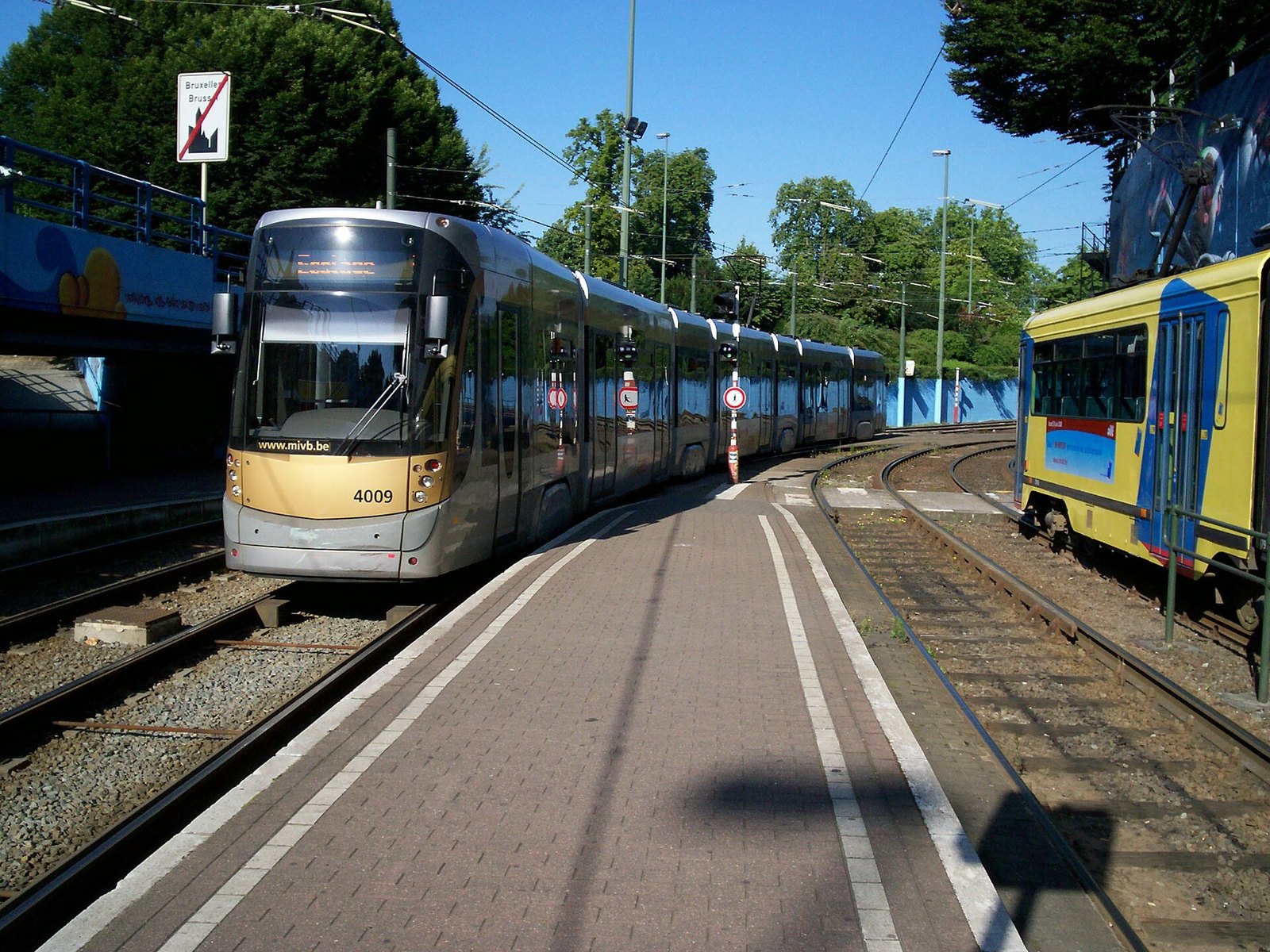
Featured image: Photo by Tram93, source, CC BY-SA 4.0
